Current affairs is the one UPSC subject with no fixed syllabus and no natural stopping point, which is exactly why it swallows more time than any other subject — often without a proportional improvement in marks.
One newspaper, read with a filter, beats three read passively
Reading multiple newspapers cover to cover duplicates most of the same news. One paper, read specifically for UPSC relevance — government schemes, international relations, economy, science and environment — with everything else skimmed, covers what the exam actually tests in a fraction of the time.
Convert news into static-linked notes weekly, not daily
Daily notes on every article rarely get revised — there's simply too much of it. A weekly consolidation pass, linking that week's news to relevant static topics (a scheme to the ministry running it, an event to its historical background), produces revision-ready notes instead of a growing pile you never return to.
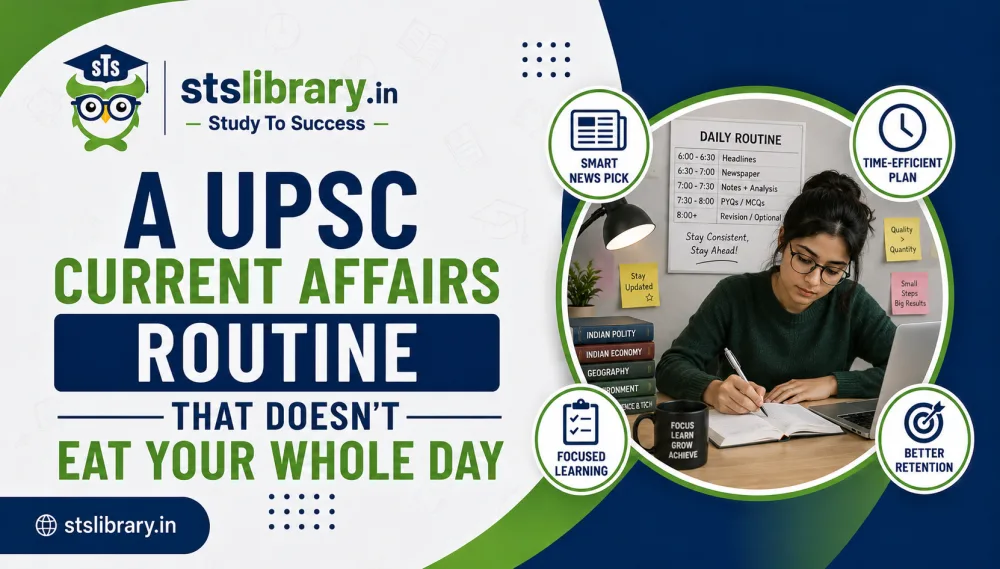
- Daily (45-60 min): Newspaper reading with a UPSC filter, brief margin notes only.
- Weekly: Consolidate the week into short, static-linked notes — this is the version you actually revise later.
- Monthly: A compiled current affairs test to check what stuck versus what needs another pass.
The goal isn't reading everything — it's reading consistently, with a clear filter, in a routine you can sustain for the full one-to-two-year preparation window UPSC realistically demands.